Parts for vehicles built in China and universal wear parts, sourced by OE number, VIN or model year in one inquiry.

We focus on common spare and wear parts for vehicles built in China, plus universal maintenance parts. Whether you are a workshop, parts wholesaler or used-car dealer, you can request a quote by OE number, VIN or model year, supplied as OEM-equivalent or aftermarket parts.
These are the five questions we are asked most often, and the ones most likely to lead to wrong-part purchases and returns. We answer them directly here.
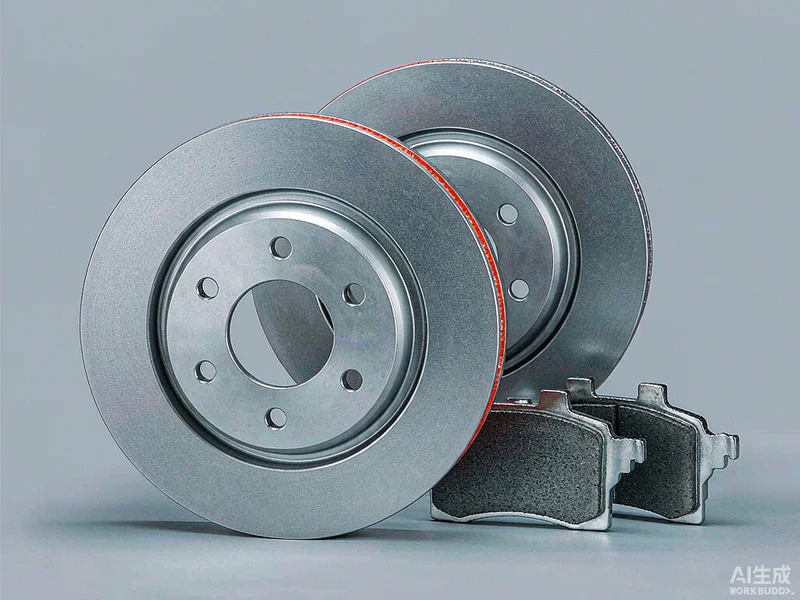 Brakes & safety
Brake pads, discs, fluid, sensors
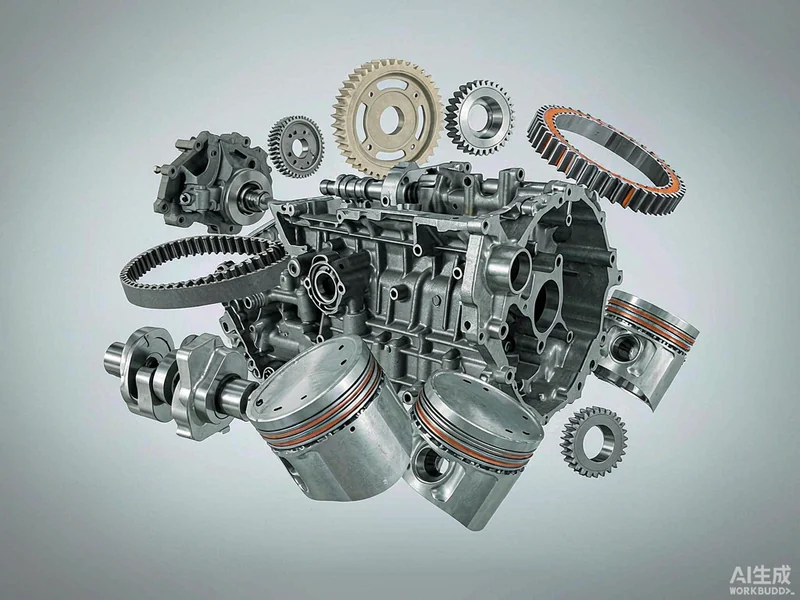 Engine & drivetrain
Filters, belts, water pump, clutch, seals
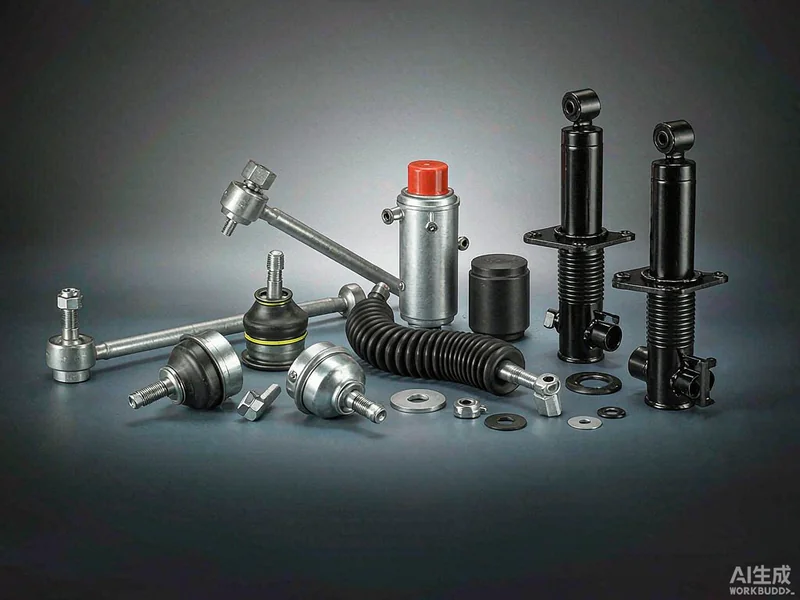 Suspension & steering
Shock absorbers, ball joints, tie rods, bearings
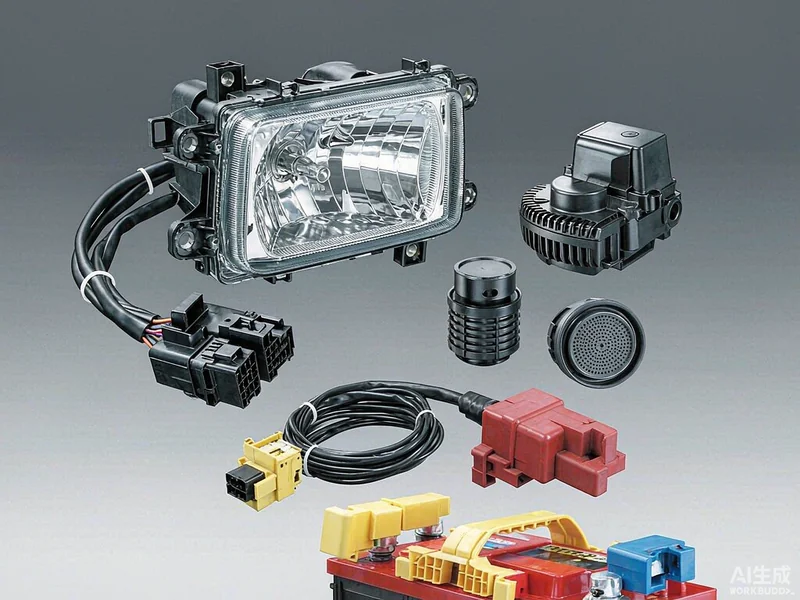 Electrical, sensors & lights
Battery, bulbs, ECU parts, wipers
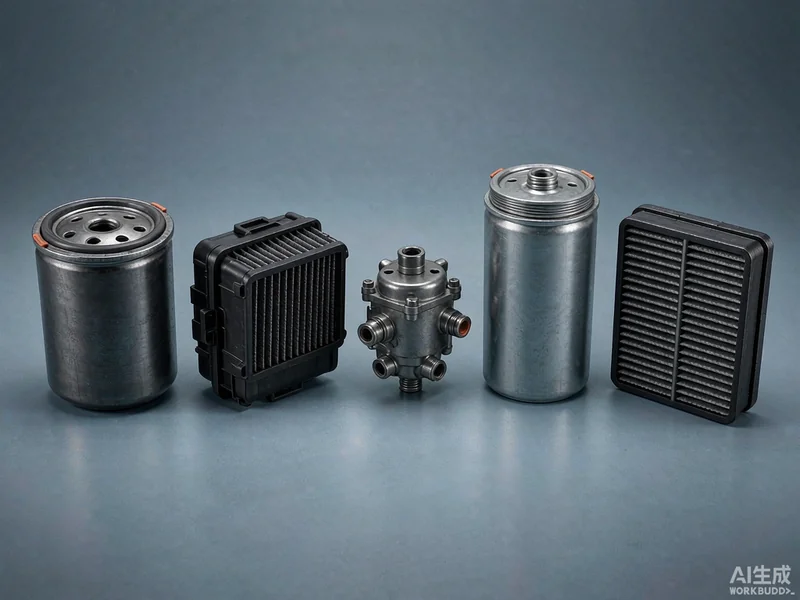 Filtration & maintenance
Oil/air/cabin filters, spark plugs, fluids
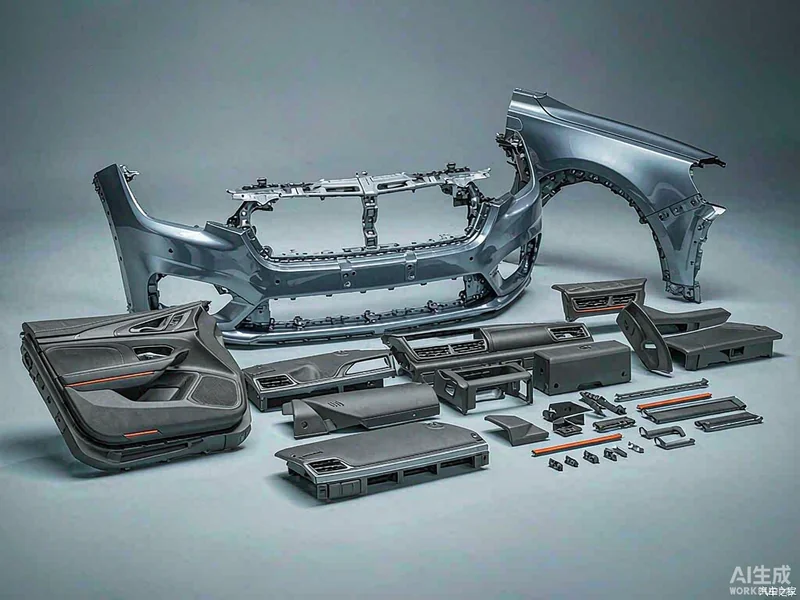 Body & interior
Sheet metal, lamps, trim, exterior
Choose by your sales channel: OEM-equivalent for quality and certification, aftermarket for fitment coverage and value.
Built to original specifications with materials and workmanship matched to the OEM standard; test reports and certificate copies available on request.
Wide coverage, fast lead time and strong value, ideal for volume repair and wear-part replenishment.
We match parts by brand, model, year, VIN and OE number, support cross-reference checks, covering the vehicles we export (any car built in China) plus universal wear parts.
Please note: correctly formatted catalogue data does not mean the fitment is factually correct. Different brands can share the same numeric code while pointing to completely unrelated parts. Always confirm against the actual part number on the vehicle or the VIN before ordering.
| Model year / year of manufacture | Hidden differences are common between model years of the same vehicle; interfaces and dimensions can change after a facelift |
|---|---|
| Displacement / engine code | Two 1.5L engines may belong to different engine families, and their part numbers are not interchangeable |
| Left-hand / right-hand drive | Steering, lighting and some interior parts differ by drive configuration and are not interchangeable |
| Emission standard | Aftertreatment and sensor parts change with the emission stage, and each stage corresponds to different parts |
| Original part number or VIN | The most reliable matching basis, and directly usable for cross-reference checking |
Our supplier network is audited to ISO 9001 / IATF 16949; test reports and certificate copies are available on request, and destination-required documents such as CE / DOT / E-mark are processed per order.
| Region | Certification / compliance | Climate / usage fit | Primary source |
|---|---|---|---|
| Saudi Arabia | SABER is the sole route for import compliance: obtain a product-level PCoC first (valid for about 1 year), then a shipment-level SCoC for each consignment, which must be declared before arrival. A PCoC without an SCoC cannot clear customs. | Extreme heat and dust; cooling, sealing, cabin filters and lighting call for heat- and dust-resistant specifications. | SABER official platform |
| Other Gulf states (including the UAE) | G-Mark covers the Gulf member states but does not replace UAE ECAS: since 2019 UAE auto parts (HS 8708) have required an ECAS certificate of conformity, administered by MOIAT. | High heat, humidity and coastal salt spray; underbody anti-corrosion parts and electrical connectors are in high demand. | GSO official / UAE MOIAT |
| Central Asia (five states) | Customs clearance follows the HS code and invoice consistency; some markets still work on the GOST system and can be supplied with the corresponding statement; EAEU members also apply TR CU 018/2011. | Wide temperature swings and dusty roads; filters, seals, suspension and brake parts wear quickly. | National customs authorities / Eurasian Economic Commission |
| CIS (Eurasian Economic Union) | TR CU 018/2011 covers around 98 product categories: high-risk items such as brakes, steering, seat belts, lighting and airbags require an EAC certificate and factory audit, while general items may use a declaration of conformity. | Severe winter cold and de-icing salt corrosion; batteries, pre-heating components and underbody anti-corrosion parts are in particular demand. | Eurasian Economic Commission (EEC) |
| West and North Africa | Nigeria's SONCAP requires FORM M plus a per-shipment SC for clearance; Egypt requires a GOEIC inspection certificate (COI) before shipment. | Heat, dust and unpaved roads; cooling, filtration, brake and suspension parts wear quickly. | SON official / Egypt GOEIC |
| East Africa | Since March 2026 Kenya requires a certificate of conformity (CoC) for imported goods; failure to obtain one incurs a fine calculated on the CIF value. | Highlands and high temperatures together; cooling system and filter parts are replaced frequently. | KEBS official |
| Latin America | Mexico's NOM does not recognise UL / CE / CB reports; the certificate must be held by a legal entity in Mexico with an RFC tax number and must carry Spanish-language labelling. Brazil requires an OCP and RBC laboratory and an application by a Brazilian legal entity holding a CNPJ. Chile offers substantially reduced duties under the China–Chile certificate of origin. | Andean highlands and tropical humidity together; brake and cooling parts call for heat-resistant specifications and high corrosion protection. | Mexico Ministry of Economy / INMETRO / Chile customs |
| European Union | CE marking is mandatory; the REACH and ELV directives apply, and automotive parts require E-mark; anti-dumping measures apply to aluminium wheels and tyres. | Winter de-icing salt corrosion and heavy rainfall; underbody protection and anti-corrosion parts attract particular attention. | European Commission Access2Markets / directive texts |
The above summarises prevailing practice; the latest official requirements of the destination country prevail. Certification requirements and required documents are subject to our written confirmation.
Parts fall mainly under HS 8708 (parts and accessories for motor vehicles), for example 8708.30 brakes, 8708.40 transmissions, 8708.80 suspension. Most subheadings in that chapter qualify for a 13% export VAT rebate, subject to the rate in force at the time of declaration. We provide the corresponding HS code and declaration elements per item to support customs valuation at destination.
| Minimum order quantity (MOQ) | Depends on the category; fast-moving maintenance parts are friendly to small quantities |
|---|---|
| Samples | Available; sample charges are agreed per order |
| Lead time | Normally 30–45 days; urgent orders negotiable |
| Shipping | Sea / air / road, door-to-door available |
| Incoterms | FOB / CIF / EXW — please state the term in the order; an unstated term is a common source of dispute in practice |
| Payment | T/T, letter of credit (L/C) |
| Packaging | Single-unit / bulk / branded packaging, properly protected |
| Wood packaging | Solid wood pallets and crates must comply with ISPM 15 and carry the IPPC mark as specified |
| Dangerous goods declaration | Airbags and pretensioners are UN3268 (Class 9); lithium batteries require a UN38.3 test summary and SDS |
| Fitment | By OE number / VIN / model year |
| Export VAT rebate | Most subheadings under HS 8708 qualify for a 13% rebate, subject to the rate in force at the time of declaration |
| LCL and FCL | Around 15 cubic metres is the common economic threshold; LCL cut-off is typically 5–7 days earlier than FCL |
| Warranty and claims | Handled per batch for damage not caused by misuse |
Parts typically take several weeks from order to arrival at port. Avoiding Chinese factory shutdown periods and overseas restocking peaks helps control both cost and lead time.
| Pre-Chinese New Year stocking (usually November to early January) | Order 6–8 weeks before Chinese New Year to avoid the production slowdown and the post-holiday scheduling peak |
|---|---|
| Overseas restocking peak (usually late February to early March) | Concentrated restocking ahead of the repair season; booking space 4–6 weeks ahead is recommended |
| Mid-year regular window (usually May to July) | Sailing schedules are relatively open; suitable for larger stocking orders and trial orders of new lines |
| Year-end stocking window (usually September to October) | Stock ahead for the following peak season and avoid the December shipping peak and tight capacity |
| Negotiable year-round | Fast-moving maintenance parts turn over quickly and can be ordered at any time to suit your stock level |
These windows are general patterns and the dates shift from year to year. Capacity and freight rates are volatile in peak season, so early booking is recommended.
The more complete the information, the more accurate the quotation and lead time. Leave a message on the contact page or send your list to our email; photos and drawings are welcome. We normally confirm supply availability within 1 business day and reply with pricing and lead time within 1–2 business days.
Aligned with our vehicle export footprint: Latin America, Central Asia & CIS, Africa, the Middle East and the EU (subject to inquiry and compliance).
Send OE number or VIN + quantity; we reply with availability, price and lead time.
The more complete the information, the more accurate the quotation and lead time. Leave a message on the contact page or send your list to our email; photos and drawings are welcome. We normally confirm supply availability within 1 business day and reply with pricing and lead time within 1–2 business days.
